


This tower is one among the highest and biggest Park Towers in Chennai, which is located at Anna Nagar Park. This tower has a cyclic upstairs. Visitors can see the full view of the City from the top of this tower, Location : Anna Nagar (Near Anna Nagar Rountana), Chennai – 600 040. Entry Fee Rs. 1/-per head. Time : 9 a.m. to 6 p.m. No Holiday.

The origin of the name Madraspatnam has long been a puzzle. The name Madras occurs in many forms like Maddaraspatnam , Madras Patnam, Madraspatnam, Madrapatnam, Madrazpatnam, etc.
According to one version there was a village of fishermen on the site, the headman of which was a Christian named Madaresan who persuaded Day to call the settlement after his own name. But we know that the name was in use even before the English came on the scene.
.jpg)
.jpg)
.jpg)
.jpg)
.jpg)
.jpg)
.jpg)
.jpg)
.jpg)
Otherwise writers have derived the name from the term madrassa (a college) and think that there might have been an old Muhammadan College at the place; or there might have been a Church of st.Mary (Madre de Deus) at Madras prior to 1640, probably founded by the Portuguese of San Thome which had been in existence from the previous century and the church might have given name to the village; or there was an Indian rules, Maddarazu, who might have been some local chief in the region in the past after whom the village might have been named maddarazpatnam.
According to one version there was a village of fishermen on the site, the headman of which was a Christian named Madaresan who persuaded Day to call the settlement after his own name. But we know that the name was in use even before the English came on the scene.
.jpg)
Otherwise writers have derived the name from the term madrassa (a college) and think that there might have been an old Muhammadan College at the place; or there might have been a Church of st.Mary (Madre de Deus) at Madras prior to 1640, probably founded by the Portuguese of San Thome which had been in existence from the previous century and the church might have given name to the village; or there was an Indian rules, Maddarazu, who might have been some local chief in the region in the past after whom the village might have been named maddarazpatnam.

Idly, Dosa. Venpongal, Kichadi and several kind of vadas, most of them rice based form the core of breakfast with side dishes like chutney, sambar and milahu podi. Lunch consists of Rice, Sambar, Rasam (kind of a soup) butter-milk, poriyal, Kootu pickle and payasam. Nonvegetarian eat Egg, fish, mutton, chicken etc.
Supper is always light with Idly, Dosa, Chappathi and Poori with suitable side dishes to go along with it.


 When you think of heroic games in Tamilnadu the first one that strikes your memory is “SILAMBAM” A kind of martial art where your weapon is a long stick. Right from the SANGHA period the Tamil kings have patronized. Even in Thiruvilayadal Puranam there are mention about this game in it. One of the ancient medical journal Pathartha Sindhamani talks about its ability to heal ailments and also adds that regular practice makes one physically strong. Footwork is the hallmark of this game .
Every step has its own name and significance to it. Many of the movements resemble those found in Bharatha Natyam dance. In the advance version of Silambam sharp weapons like knife, spear and many other arms also used. Even wars have been fought with warriors resorting to Silambam as the main form of combat.
 There were no formal schools to teach Silambam. Only the traditional ‘Guru-Sisya Parambara’ method was followed whereby the teacher passed his knowledge to his disciple and this continued like a chain unbroken. Later there was an institute to teach Silambam was established at Vellore Fort and several others cropped in the Southern parts of Tamilnadu only to vanish due to lack of patronage. But even now no temple festival passes-off without the enthralling display of Silambam in its finer form.

It is true that the Tamil Drama movement began by the venerable Shankaradas Swamigal lost some of its glamour with the advent of Cinema. But when compared with the vigour with which the drama movement faced the turmoil situation prevailed then, the achievement of Cinema pales into insignificance. Besides, Tamil Drama has the distinction having produced five illustrious, Chief Ministers in Arignar Anna, Kalaignar Karunanidhi, M.G.R., Tmt.V.N.Jaanaki, Selvi Jeyalalithaa . Tamil Dramas proved to be effective ammunition in the country’s fight for freedom Doyens like Viswanathadas, Bhaskaradas whipped up patriotism among the masses in South India using drama as an effective tool.
 MGR and Shivaji who later became legends in cine field began their histrionic career under the tutelage of Shankaradas Swamigal in the Boys’ drama company run by him. In Musical Drama the couple KB Sundarambal and SG Kittappa, with their soul rendering performances became the ‘darlings’ of the people. KB Sundarambal even courted arrest for having sung patriotic songs in her dramas. Under the disguise of mythological dramas the artists spread message of freedom. TKS brothers staged social dramas and these dramas brought about social awareness and the freedom struggle was the core theme of many a dramas. Nawab Rajamanikkam also occupies a pride of place in this respect.
Though the literary works of such geniuses like T.Jaanakiraman and Alagirisaamy found a place in Sahasranamam’s Seva Stage, the real effort to give prominence to such work was made by Prof. Ramanujam of Thanjai Tamil University. In order to give new life and lease to Tamil drama he established drama ‘workshops’ (Koothu-pattarai) His artistically modern approach did full the Tamil drama from the rut it was in. He was followed by Naa.Muthuswamy, Pariksha Gnani, Veli Rangarajan and they did give a new direction and dimension for Tamil Drama. Under the circumstances the street dramas created by Badal Sarkar assumed the roleof a social movement and it created such an impact that it had its influence in Tamilnadu as well. Youths inclined towards left odeologies used this as an effective instrument to spread their messages among the masses. In that respect Thiru Piralayan through his Chennai Kalai-Kulu and Tmt. Mangai through her Chennai Kalai-Kulu are making valuable contribution for the renaissance of Tamil drama. Through experiment young artiste like Murugaboopathy are show-casing ancient glories to the modern era.
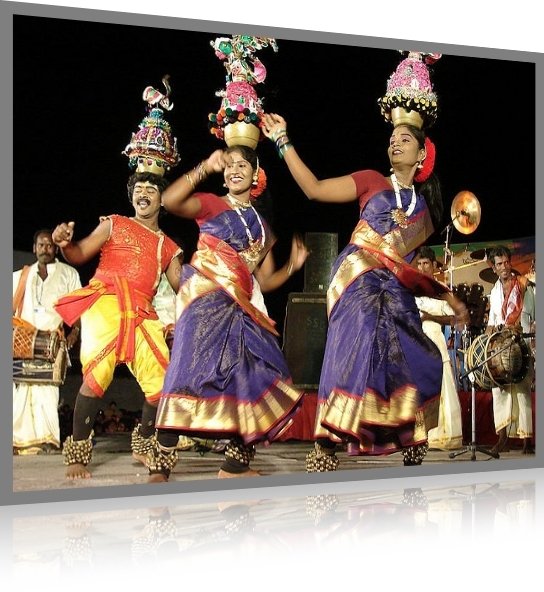 Art and culture are two most integral parts of human civilization, particularly sculptures, painting and temple architecture. In these respects Tamilnadu stands head and shoulder above all others. As far asbsculptures are concemed the Mahisasa-mardhini belt of sculptures of Pallava Period is really a challenge to anyone of such nature throughout the world says the Principal of Chennai Fine Arts College Thiru Chandru. The metal statues of Nataraja is the finest example. It is the personification of the magnificent concept of the Universe.
 So are the Rishaba Vaahana of Lord Siva, Gaja Samharam, Sandiya Nadanam. These depicted in painting as well do illustrate the mastery of Tamilnadu in these fields. The line , life and rhythm found in these master pieces vouch for the sway Tamilnadu still holds in these form of art. Tamilnadu temples built in stone adhering to Sirppa Saastra like the Kanchipuram Kailasanathar Kovil, Thanjavur Brahatheeswarar Kovil and the one at Gangaikonda Cholapuram and the role model for all these the Kodumbaloor Moovar temple stand as monuments and fine example of temple architecture and appreciated by the art connoisseurs throughout the world.


The great stalwarts like Bharatha Ratna M.S.Subbulaxmi, Dr.Bala Murali Krishna, Chembai, Chemmangudi and etc. are considered as finest exponent of Karnatic form of music while Ilayaraja who created a niche for himself in Film music contributed in no lesser a manner to popularise the music of rural people. The position it enjoys now on


Tamils considered to be one of the ancient races were good at agriculture, crafts, art, literature, culture and language even in the pre-historic days. Their life-style was that of a heroic nature as amply illustrated in Puranaanooru, yet another epic of ancient Tamil literature. They also laid more emphasis on blood relationship, particularly on the maternal side, hence the concept of joint-family, race, region and language occupied pride of place.

Even the Gods they worshipped were based on this blood relationship. The villages were self-contained therefore certain values of basic nature were held in high esteem even today. Aggression, advent of trade etc brought in a influx of multiple cultures and values.


Freedom struggle gained momentum under the dynamic leadership of Mahathma Gandhi and the contribution of Tamilnadu towards this was quite significant. India attained Independence on the 15th day of August, 1947 and Andhra Kesari T.Prakasam became the Chief Minister of the then Madras Presidency. India became a Democratic Republic and the first general election held thereafter saw the veteran leader Rajaji assume the Chief ministership.

In 1953 The states were divided on lingual basis and the areas bereft of certain parts of Andhra, Kerala and Karnataka became Madras Province.
 Since then Kamarajar, Bhakthavatsalam, Arignar Anna, Kalaignar Karunanidhi, M.G.R., Tmt. V.N.Janaki, and Selvi Jayalalithaa have adorned the chair of the Chief Minister. In 1967 when Anna assumed Power the name of Madras Province underwent a change and came to be known as Tamilnadu.


With the arrival of Vasco da Gama in the year 1498 AD, right from Calicut and down the shores of Tamilnadu Portughese migrated in large numbers. Following them the Dutch and the English also arrived. Ensured Power struggle among them saw the Englishmen emerge victorious. They consolidated all the areas held by them and established the Madras Presidency.


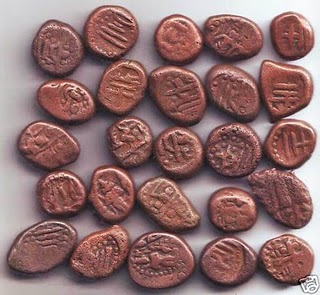
The year 1529 AD marked the beginning of the rule of Nayak dynasty over Madurai. Those who ruled small portions of land called themselves as kings were made as chieftains (Palayakkars) The most important king in the Nayak dynasty was Thirumalai Nayakkar. It was during his period that such historical landmarks like Temple of Meenakshi Amman and Thirumalai Nayakkar Mahals were built. It was during his period the Dutch and the Portughese came to Tamilnadu for trading purpose and eventually they established control over the places held by them for living and trading.
 Then followed the rule of Queen Mangamma who was the Royal consort for the young king Sokkanathar the second. She was supposed to be an able administrator in contrasd was the rule of Sokkanathar the second who came to power when he became a major. He wasted valuable resources and expired in the year 1731 AD. He had no issues and the onus of running the state fell onm the tender shoulder of his wife Meenakshi. In order to capture Madurai the Nawab of Arcot sent his troops under Chandha Sahib. Rather than being captured she chose the honourable way outsuicide. With that the rule of Nayaks came to a sad end.

